
_1.webp)

Many men and boys are living worse lives than they were before the pandemic, according to the latest evidence gathered by The Centre for Policy Research on Men and Boys (CPRMB).
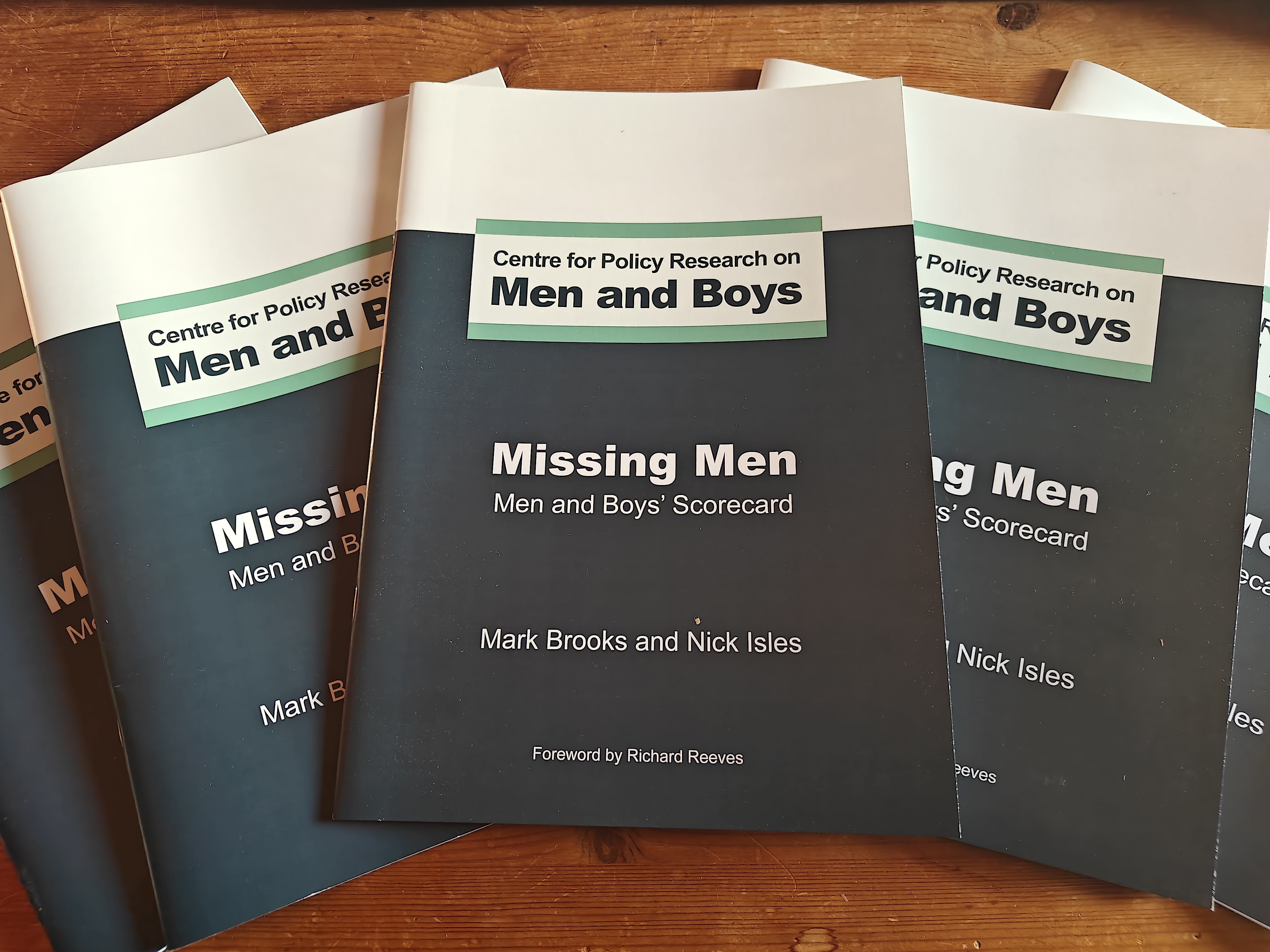
The centre’s unique annual “Missing Men” report shows that compared to 2019, male unemployment is higher and mental health is declining while the number of men in prison continues to grow, and too many do not have a roof over their heads. On the positive side, physical health is starting to improve, and educational outcomes are gradually getting better although at a glacial rate and a significant gender attainment gap persists.
Compiled from annualised information produced by official government and statistical sources, the report shows too many men and boys in the UK are still missing - missing from the economy, missing out on education and missing from society and families. Key findings include that:
- Male rates of unemployment are rising on an annualised basis and are higher than pre-pandemic levels, with many desperately wanting a job but unable to land one.
- Sickness rates and the number of workdays lost to sickness among men are growing.
- There are approximately 39 times as many empty second homes in England as there are male rough sleepers. If each rough sleeper was given one of these homes, there would be more than 150,000 empty properties left over.
- The number of young men Not in Education, Employment or Training (NEET) remains significantly higher than pre-pandemic levels. If assembled together, the number of male NEETS would fill Glastonbury festival to its daily capacity 2.5 times over.
- 1,276 boys were permanently excluded from primary school last year - equivalent to more than 42 full standard-sized classes.
- Men account for three times as many suicides as women, while they also make up seven out of ten victims of homicide.
Lead Researcher for CPRMB and primary author of the Missing Men Scorecard, Martha Lucas, says, “Missing Men shows that the lives of many men and boys today are still worse than before the pandemic. In education, employment, healthcare and crime, there are significant measures by which male lives have gotten worse – not by every measure, but a significant number nonetheless. The data shows that men need support, and failing to enact concrete steps to help them will have dire consequences for the whole of society.”
CPRMB Director, Nick Isles, says, “There are so many areas of government and policy where a gender-sensitive lens could be making a huge difference to the lives of men and boys, and therefore, improving those of women and girls in the process too. In revealing the deep-rooted issues a great number of men and boys continue to face in many parts of Britain, the report shows why this approach is vital.”
To view the full Missing Men Scorecard, please click on this link.